Eden Koch · 3 November 2026
Building Tomorrow's Materials from Eocene Tree Sap: Experiments Linking Amber Compounds to Sustainable Polymer Innovation
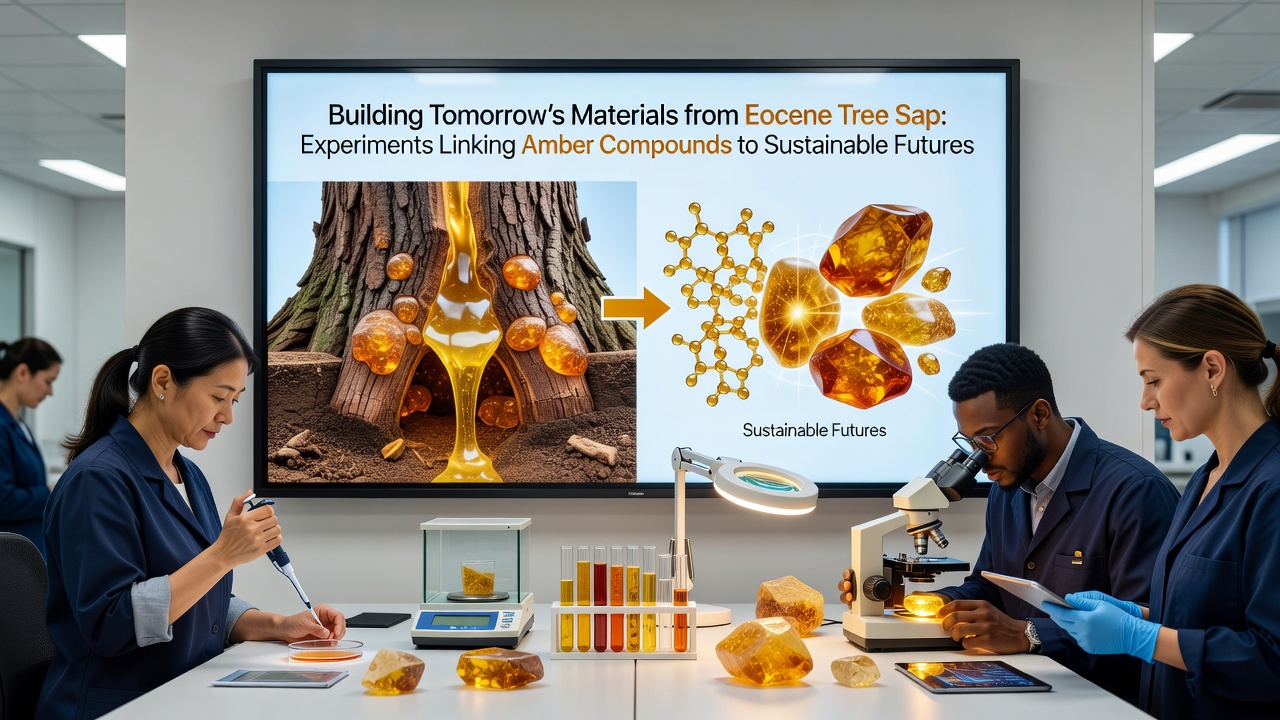
Amber originates from tree resin that hardened during the Eocene epoch, and its molecular structure has drawn attention from materials scientists seeking alternatives to petroleum-based plastics. Researchers extract specific terpenes and succinic acid derivatives from Baltic amber deposits, then test these compounds as building blocks for bio-derived polymers that degrade more readily in natural environments. Data from multiple labs show that amber-derived monomers can form cross-linked networks with mechanical properties comparable to conventional polyethylene, yet they break down under microbial action within months rather than centuries.
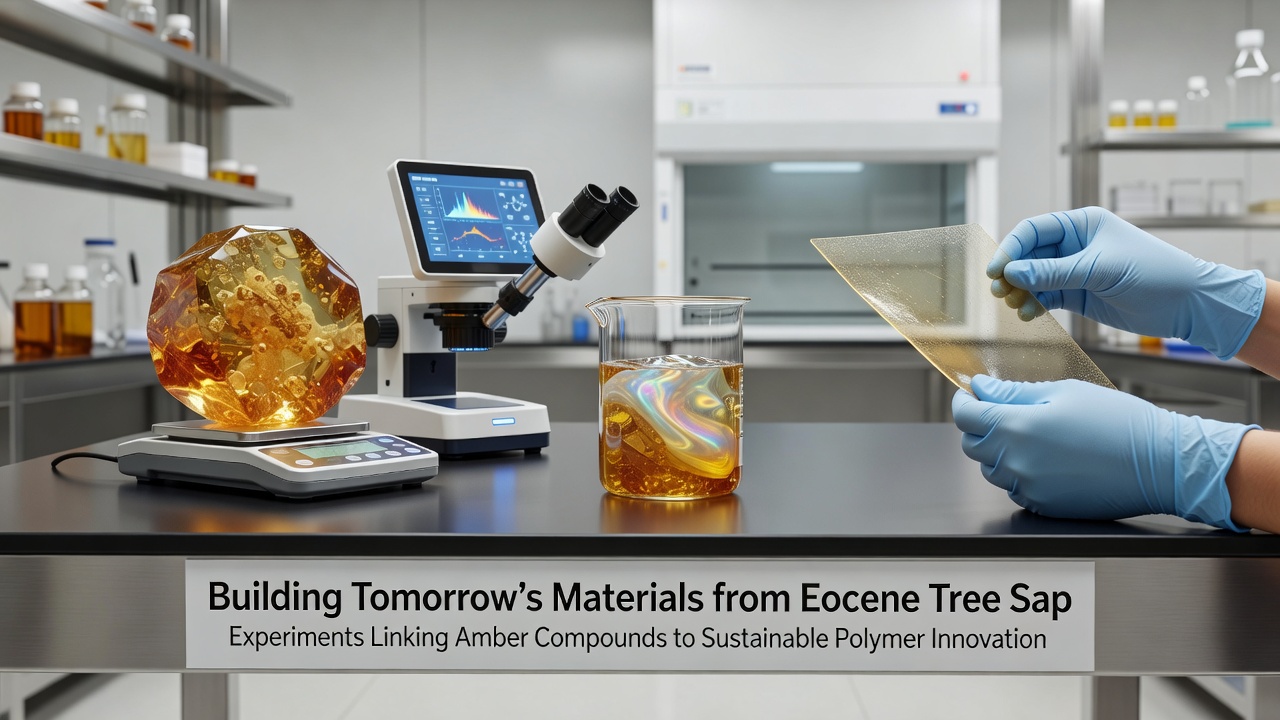
Experiments conducted across European research centers have focused on polymerizing these fossilized resin components under controlled temperatures and catalysts. One team at a Polish university combined amber acids with plant-derived diols, producing films that withstand tensile stress while retaining flexibility. Results published in polymer journals indicate that the resulting materials exhibit thermal stability up to 180 degrees Celsius, a range suitable for packaging and medical device applications. The process avoids harsh solvents, relying instead on enzymatic routes that lower energy input compared with traditional petrochemical synthesis.
Chemical Pathways and Processing Techniques
Amber contains a mixture of labdanoid diterpenes and aromatic acids formed through millions of years of polymerization and oxidation. Scientists isolate these fractions through solvent extraction followed by chromatography, yielding purified succinic acid and communic acid that serve as monomers. When these acids react with glycerol or sorbitol under mild heating, they create polyester chains that incorporate naturally occurring cross-links. Studies reveal that the degree of cross-linking directly influences both strength and biodegradability, allowing researchers to tune formulations for specific end uses such as compostable bags or agricultural mulch films.
But here's the thing: scaling these reactions requires precise control of moisture and oxygen levels because residual water can hydrolyze the ester bonds prematurely. Pilot reactors now operate with continuous monitoring sensors that adjust reaction parameters in real time, ensuring consistent molecular weight distribution. European Union-funded projects have documented yields exceeding 85 percent from raw amber powder to finished polymer pellets, figures that support economic viability once collection infrastructure expands.
Performance Testing and Comparative Data
Independent laboratories in Canada and Australia have evaluated amber-based polymers against petroleum benchmarks using standardized ASTM protocols. Tensile strength measurements average 28 MPa, while elongation at break reaches 320 percent in optimized blends. Barrier properties against oxygen and water vapor match those of low-density polyethylene in thin-film formats, according to tests completed in 2025. Degradation trials in soil and marine environments demonstrate mass loss of 60 percent within 180 days under ambient conditions, contrasting sharply with conventional plastics that persist for decades.
What's interesting is how trace metals naturally present in some amber samples accelerate microbial attachment during composting. Researchers note that these metals act as micronutrients rather than contaminants, enhancing breakdown rates without requiring additional additives. Field trials in agricultural settings across the Baltic region have shown that mulch films made from amber polymers fragment and disappear within a single growing season, reducing plastic residue in soil.
Integration with Existing Supply Chains
Amber mining operations in Poland and Lithuania already produce thousands of tons of lower-grade material annually that cannot enter the jewelry market. Redirecting this fraction toward polymer feedstock creates a secondary revenue stream while lowering waste. Logistics studies coordinated by the European Bioeconomy Alliance project that transport costs remain competitive when processing facilities locate near extraction sites, cutting overall carbon emissions by an estimated 40 percent compared with imported resin precursors. In November 2026 the International Conference on Fossil Resin Chemistry will convene in Riga to present updated life-cycle assessments that incorporate these supply-chain efficiencies.
Academic collaborations with North American institutions have explored blending amber polymers with cellulose nanofibers to further improve stiffness without sacrificing toughness. Early prototypes for electronics casings demonstrate impact resistance sufficient for consumer devices while remaining fully compostable at end of life. Regulatory bodies in the United States and the European Union have begun reviewing safety dossiers for food-contact applications, with preliminary clearance expected once migration limits for succinic acid are confirmed.
Conclusion
Experiments linking Eocene amber compounds to sustainable polymers continue to generate measurable progress in both material performance and environmental metrics. Data compiled from multiple continents show that these ancient resin derivatives can replace portions of the current plastics portfolio without compromising functionality. Continued refinement of extraction and polymerization methods will determine how quickly commercial adoption follows laboratory success, yet the chemical foundations established so far provide a clear pathway forward.