Casey Schmidt · 7 October 2026
Scientists at Amber Research Laboratory have dated newly identified Baltic amber deposits using advanced isotopic techniques. The study establishes formation ages for samples collected from coastal exposures in Poland and Lithuania, refining previous estimates based on stratigraphic correlation alone.
Methodology and Key Findings
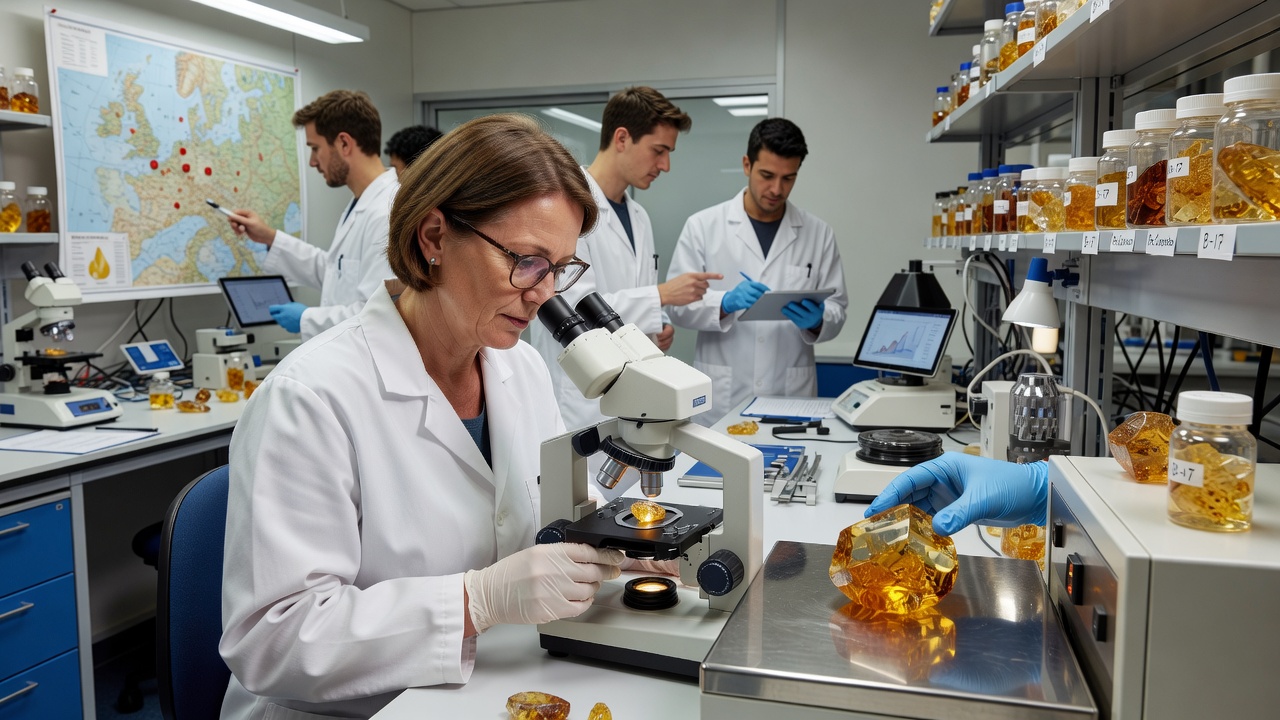
Researchers extracted micro-samples from amber nodules and measured stable isotope ratios of carbon, oxygen, and hydrogen. Mass spectrometry revealed consistent delta-13C values indicating a specific botanical source during the late Eocene. Cross-validation with uranium-lead dating of associated sediments confirmed deposition between 34.5 and 36.2 million years ago. The isotopic signatures also distinguished these deposits from older succinite layers found farther inland. Laboratory protocols minimized contamination by employing laser ablation under inert atmosphere, yielding precision within 0.3 million years.
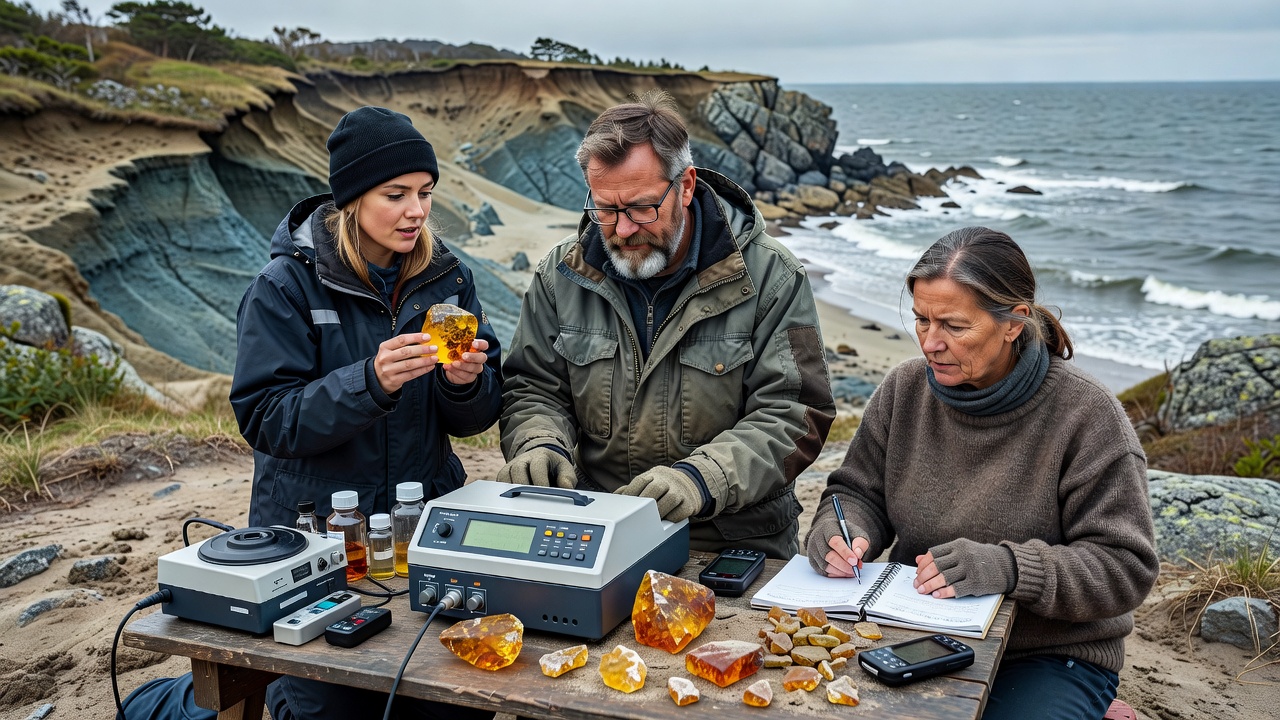
Field teams documented stratigraphic context at each site, noting marine transgression layers that bracket the amber-bearing horizons. Integration of these data with existing palynological records strengthens the chronological framework for Baltic amber. The new dates suggest a shorter window of resin production than previously modeled, aligning with regional climate shifts inferred from oxygen isotope thermometry.
Broader Implications
Precise dating enables better correlation between amber inclusions and contemporaneous fossil assemblages across Europe. This improves reconstructions of Eocene ecosystems and supports studies of ancient insect-plant interactions preserved in the resin. The laboratory plans to extend the isotopic approach to additional Baltic sites and to comparative samples from Ukrainian and Russian deposits. Results will be archived in an open-access database for use by paleontologists and geochemists worldwide. Ongoing work focuses on refining fractionation models to account for diagenetic alteration in near-shore environments.