Kai Werner · 7 October 2026
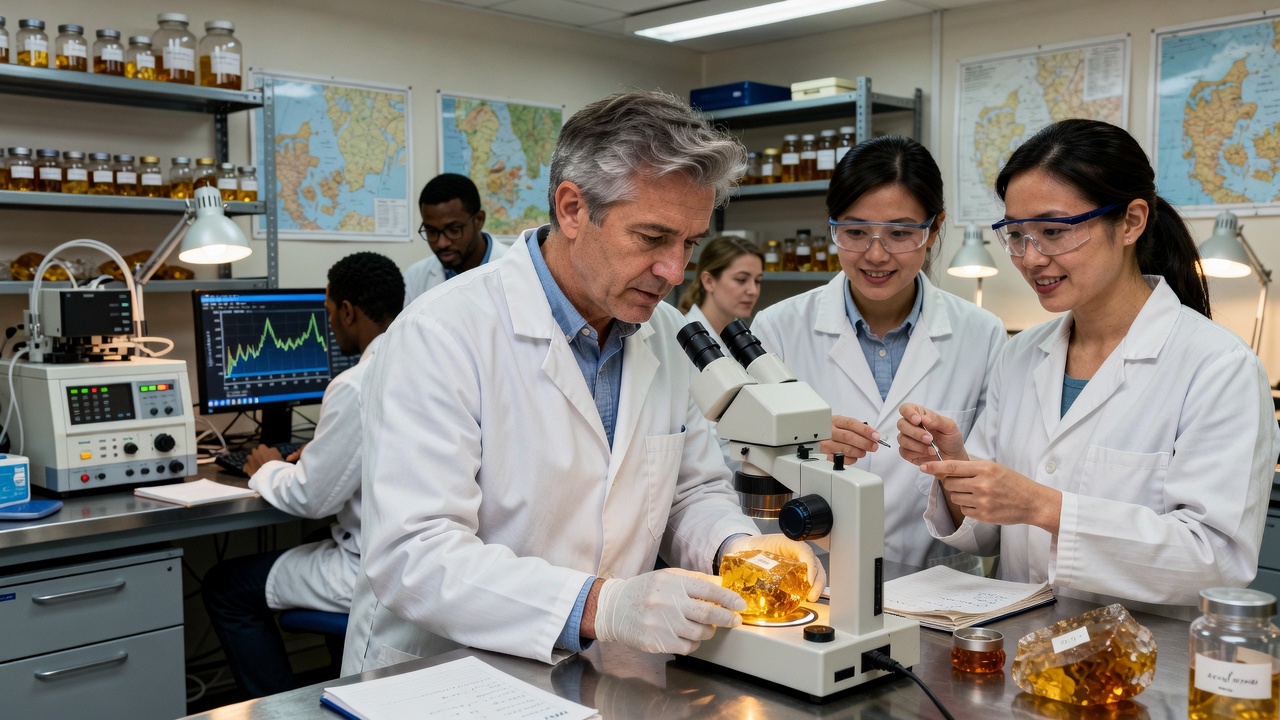
Scientists at the Amber Research Laboratory have successfully applied advanced isotopic techniques to determine the age of newly discovered Baltic amber deposits. This breakthrough provides valuable insights into the geological history of the region and enhances our understanding of prehistoric ecosystems.
Advanced Isotopic Analysis Techniques
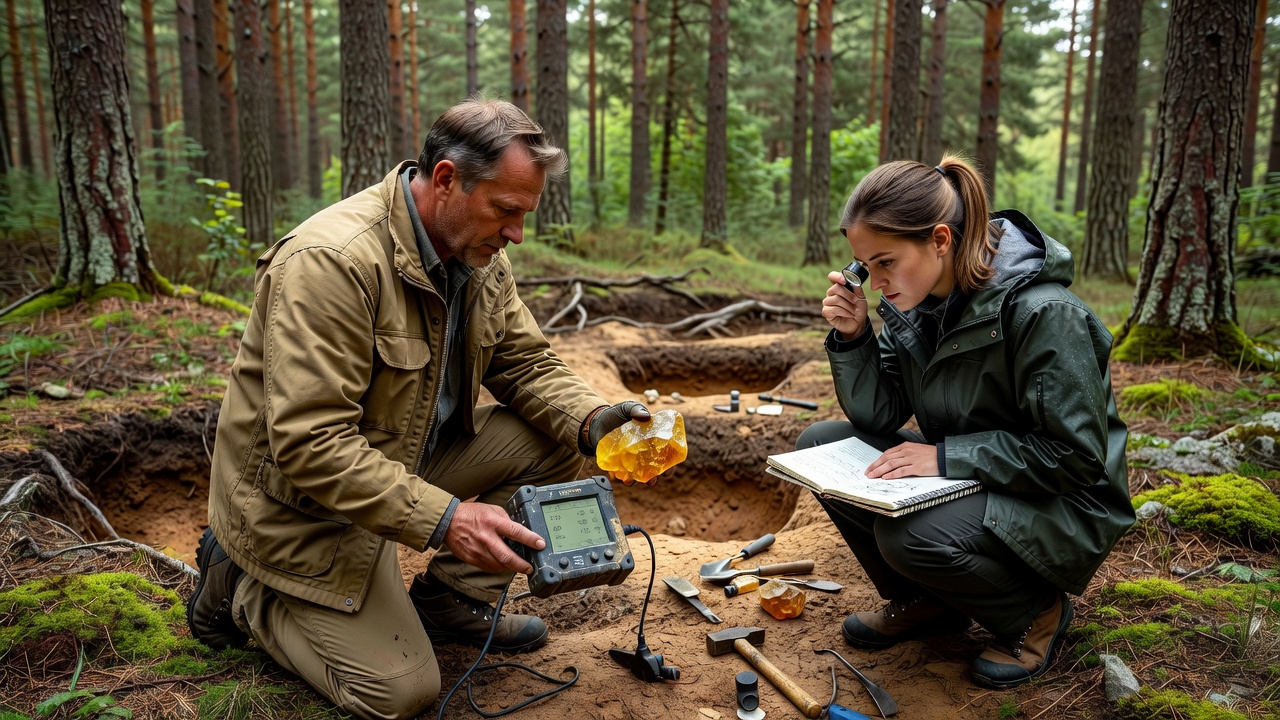
The team utilized carbon-14 dating combined with strontium isotope ratios to establish precise timelines for the amber formation. Samples were collected from sites along the Baltic coast, where recent excavations uncovered previously unknown deposits. By measuring the decay of radioactive isotopes within the resin, researchers could pinpoint the amber's origin to the Eocene epoch, approximately 45 million years ago. This method offers greater accuracy than traditional stratigraphic approaches, which often rely on less precise geological correlations. Additional techniques such as uranium-lead dating on associated minerals provided corroborating evidence for the age estimates.
Further analysis involved oxygen isotope compositions to reconstruct the paleoclimate conditions during amber deposition. These measurements revealed that the ancient forests responsible for the resin production thrived in a warmer, more humid environment than previously estimated. The integration of multiple isotopic systems has allowed for a comprehensive understanding of both the temporal and environmental contexts of these deposits. Researchers also employed neodymium isotopes to trace the provenance of the sedimentary materials surrounding the amber.
Significance for Geological and Paleontological Studies
The dating results have significant implications for understanding the evolutionary history of flora and fauna preserved in Baltic amber. Inclusions of insects and plant material can now be placed within a more accurate chronological framework, aiding in the reconstruction of ancient ecosystems. This work also contributes to broader studies on the formation of sedimentary basins in Northern Europe and the impacts of climate change over geological timescales.
Collaborations with international institutions have expanded the scope of the research, incorporating data from similar amber sites in Ukraine and Russia. The findings challenge existing models of amber distribution and suggest that tectonic activities played a more prominent role in exposing these deposits than earlier theories proposed. Ongoing projects aim to refine these techniques for application to other fossil resins worldwide, potentially unlocking new discoveries in paleobiology.
Future research at the laboratory will focus on developing non-destructive isotopic methods to preserve valuable specimens while obtaining dating information. This advancement could revolutionize the field of amber paleontology by enabling analysis of museum collections without damage. The laboratory continues to publish detailed reports on their methodologies and results in peer-reviewed journals, fostering global scientific collaboration and advancing knowledge in the field.